Clifton Village Green
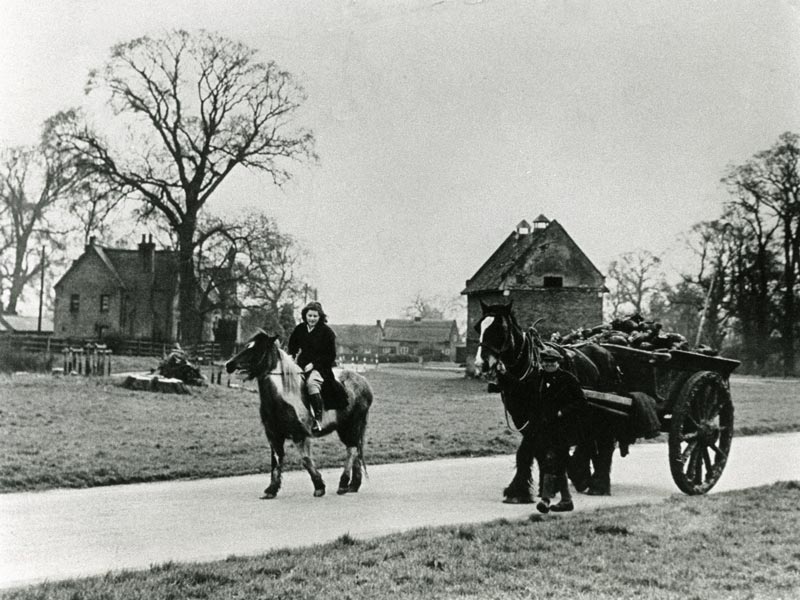
For centuries, the village green has been at the heart of community life in England, and Clifton is no exception.
Clifton Village Green remains a focal gathering place, surrounded by historic landmarks including the old rectory, the former school, the dovecote and the Wells Almshouses.
Traditionally, greens served as informal spaces for recreation, meetings and celebrations. In Clifton, past generations gathered here for cricket, football, village fetes and fireside storytelling. Beyond leisure, village greens also played a practical role. In times of conflict or crisis, communities would pool their manpower on the green to protect livestock and organise collective defence.
Today, Clifton Village Green functions largely as a peaceful open space despite its proximity to the busy A453. Interestingly, one historian has suggested that a turf maze once existed on the green. Visitors will also notice two impressive mature trees standing in the south-west corner - silent witnesses to centuries of village life.
May Day Traditions
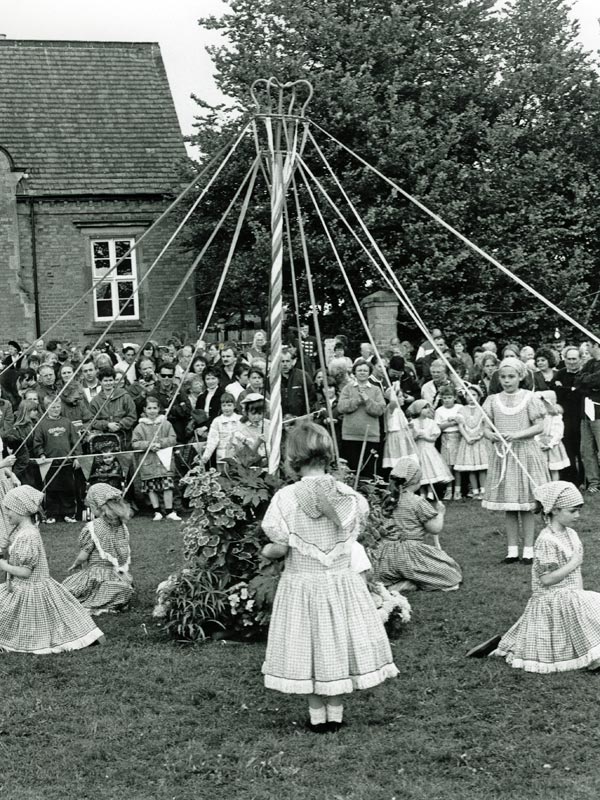
May Day celebrations in Britain originate from ancient pagan festivals marking the arrival of spring. Folklore held that May was the month when cows could be milked three times a day - a sign of seasonal abundance. Villages traditionally marked the occasion with festivals in which a young maiden was crowned May Queen and children danced around elaborately carved maypoles.
For centuries, permanent maypoles stood in villages across England. However, in 1644 Parliament ordered many to be removed, as the Church disapproved of festivities that encouraged youthful revelry. Despite this, many communities quietly continued the tradition.
Clifton was one such village. Annual May Day fetes featured Morris dancing, side-shows, refreshment tents, competitions and the crowning of the May Queen. During the 18th and 19th centuries, these gatherings were likely especially popular, as the area was already attracting visitors to Clifton Grove and the Ferry Inn.
A permanent maypole was reintroduced to Clifton Green in 1904, but it was removed at the start of the Second World War and has never been reinstated.
The Old Clifton School
The Old Clifton School building - now serving as the village hall and community centre - stands as an important reminder of the village’s educational heritage (not to be confused with the former Clifton family stately home).
A plaque on the front of the building records its origins:
“These schools and school-houses were erected by Henry Robert Clifton, Esquire, and the corner stone was laid by Mrs. Clifton on the 3rd day of November, 1871.”
The school officially opened in April 1872 with 48 pupils. By the following year, a night school had also begun, initially attended by 13 men - evidence of the growing importance of adult education in the Victorian period.
The school closed in 1956 following the construction of modern schools in the expanding Clifton housing estates, including Brooksby and Farnborough. Today, the building continues to serve the community in its role as a village hall.
The Wells Almshouses
Almshouses were a common feature of 18th- and 19th-century England, providing accommodation for the elderly, sick and poor. They were typically founded by wealthy landowners, church figures or charitable benefactors.
The Clifton Almshouses stand discreetly behind a hedge in the south-west corner of the green. They were built in the 18th century following the 1712 will of George Wells, who endowed the property to house six poor unmarried or widowed women.
Wells appears to have been a man of considerable means, donating lands and property in Cropwell Bishop, Wilford and Ruddington to support the foundation. Sir Gervase Clifton and his heirs were appointed trustees to maintain the almshouse. Residents originally received a small allowance and three tons of coal annually from Clifton Colliery — a valuable provision in the days before modern heating.
The building was restored in the 1970s and has since been converted into privately owned homes. Each garden contains a small outbuilding, sometimes said to have been intended as a private chapel. While this seems an unlikely luxury for the period, the religious inscription on the front of the almshouse reflects Wells’ strong personal faith:
“I to God’s glory dedicate this place
Inspired there to by
His Most Holy Grace.
May His great name forever here be praised
Then my ambition to its pitch is raised.”
Today, the Wells Almshouses remain an important historic feature of Clifton Village Green, linking the present-day community with its charitable and social past.
DRAFTING NOTE
Need more (possibly older) pictures - maybe we have enough for a gallery?
Material on this web page based on "Wilford & Clifton Index" (1997) by Roy Mat.
© Clifton Village Residents Association 2026
Created by: kazarooony webdesign